Urgent care near me
 Key points
- Urgent care clinics can quickly diagnose and treat urinary tract infections (UTIs), providing relief outside of regular doctor's hours.
- UTIs, most commonly caused by E. coli, can lead to symptoms like a burning sensation during urination and frequent urges to urinate.
- Urgent care can handle uncomplicated UTIs, typically prescribing a short course of oral antibiotics and recommending over-the-counter pain relief.
- More serious UTIs, such as those that have spread to the kidneys or occur frequently, may require specialized attention beyond urgent care.

A urinary tract infection (UTI) can show up quickly and make you feel pretty miserable. Burning when you pee, the urge to go constantly, and lower belly discomfort are just a few of the common symptoms. The good news is that UTIs are usually simple to diagnose and treat, and urgent care is a great place to go when you need fast relief.
Whether it’s your first UTI or something you’ve dealt with before, urgent care clinics can do a quick test, confirm the infection, and prescribe antibiotics to clear it up. They’re also a good option if your regular doctor isn’t available or you need help outside of normal office hours. Read on to learn why getting care early will help ease symptoms faster and prevent the infection from spreading to your kidneys, so don’t wait it out if something feels off.
What is a urinary tract infection (UTI)?
A urinary tract infection, or UTI, occurs when bacteria, most commonly E. coli, enter the urinary tract, which includes the bladder, urethra, and sometimes the kidneys. These bacteria aren't supposed to be there. When they multiply, they can cause inflammation and irritation that lead to those telltale symptoms, such as burning during urination or a constant urge to urinate.
UTIs are especially common in women because of the way the female urinary system is structured, but they can also affect men, children, and older adults. Certain factors, like dehydration, holding in urine too long, or even sexual activity, can increase your risk. The good news is that UTIs are usually easy to treat once diagnosed, and getting care early can help you avoid complications and feel better fast.
Common symptoms of a UTI
UTIs can show up in a few different ways, but there are some classic symptoms that most people notice right away:
- The most common is a burning sensation when you pee, along with the frequent urge to go, even if only a little comes out each time.
- You might also notice that your urine looks cloudy or has a strong, unpleasant smell.
- Some people feel pressure or pain in the lower abdomen or pelvis, and in more serious cases, there may be blood in the urine or a low-grade fever and fatigue.
- In older adults, UTIs can be a bit trickier to spot; symptoms might show up as confusion, sudden weakness, or even an unexpected fall, especially in people over 65.
Whether symptoms are obvious or subtle, it’s important to take them seriously and get checked out early.
When urgent care is the right place for UTI treatment
Urgent care is a great option for UTI treatment, especially when you need fast relief but can’t get in to see your regular doctor:
- If your symptoms are mild to moderate, such as burning when you urinate, frequent urges to urinate, or pelvic discomfort, urgent care providers can quickly confirm the infection and prescribe antibiotics to help you feel better.
- It’s also a smart choice if it’s after hours, on the weekend, or if you just can’t get a same-day appointment with your primary care provider.
If you’ve had UTIs before and recognize the signs, urgent care can help streamline the process, so you don’t have to wait in discomfort. They’re equipped to handle most uncomplicated UTIs quickly and efficiently, so you can start treatment and feel better sooner.
What urgent care can do for a UTI
When you visit urgent care for a UTI, the provider will usually start with a simple urine test, either a urinalysis or a urine culture, to confirm there’s an infection and identify the type of bacteria causing it. If it’s a typical UTI, they’ll likely prescribe a short course of oral antibiotics such as nitrofurantoin or trimethoprim-sulfamethoxazole, which are both commonly used and work quickly.
To help ease the burning and discomfort, they might also recommend over-the-counter pain relief like phenazopyridine (often sold as AZO), ibuprofen, or acetaminophen. You’ll also get clear follow-up instructions: drink plenty of water, take the full course of antibiotics even if you start feeling better, and watch for any symptoms that get worse or don’t improve. With prompt treatment, most people start feeling better within a day or two.
When a UTI requires more than urgent care
While urgent care can handle most uncomplicated UTIs, there are times when a UTI may require more specialized attention:
- If you develop symptoms like fever, chills, pain in your back or side, nausea, or vomiting, it could be a sign that the infection has spread to your kidneys, and that’s a more serious condition that may need stronger treatment or even IV antibiotics.
- If you’ve had multiple UTIs in a short period of time, your provider might refer you to a urologist to check for underlying causes or recommend imaging tests to get a clearer picture.
- If you’re pregnant or have other complicating conditions like diabetes or a weakened immune system, it’s especially important to be cautious; your provider may want to monitor your case more closely or adjust your treatment plan.
When in doubt, getting checked out quickly can help you avoid bigger problems down the line.
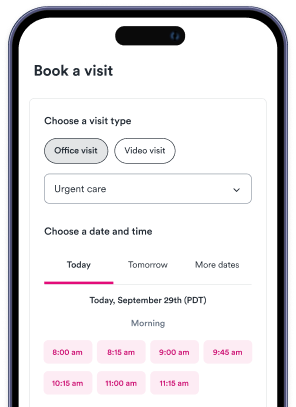
Think you have a UTI? Book a same-day visit to urgent care
Don’t wait and suffer through the symptoms; use Solv to find a nearby urgent care clinic for quick testing, fast relief, and same-day treatment for UTIs and other common health concerns.
FAQs
Can I go to urgent care for a urinary tract infection (UTI)?
Yes, urgent care is a suitable place to seek treatment for a UTI. They can quickly diagnose the infection and prescribe the necessary antibiotics for treatment.
What are the common symptoms of a UTI?
Common symptoms of a UTI include a burning sensation when urinating, frequent urges to urinate, cloudy or strong-smelling urine, and lower abdominal or pelvic discomfort. In more severe cases, there may be blood in the urine or symptoms like low-grade fever and fatigue. In older adults, symptoms may manifest as confusion, sudden weakness, or unexpected falls.
How is a UTI diagnosed and treated at an urgent care clinic?
At an urgent care clinic, a UTI is typically diagnosed with a simple urine test, either a urinalysis or a urine culture. If the UTI is confirmed, the clinic will usually prescribe a short course of oral antibiotics such as nitrofurantoin or trimethoprim-sulfamethoxazole. Over-the-counter pain relief may also be recommended to ease discomfort.
When should I seek more specialized care for a UTI?
While most uncomplicated UTIs can be handled at an urgent care clinic, there are instances when more specialized care may be required. If you develop symptoms like fever, chills, back or side pain, nausea, or vomiting, it could indicate that the infection has spread to your kidneys and requires stronger treatment. Frequent UTIs, pregnancy, and other complicating conditions like diabetes or a weakened immune system may also necessitate more specialized care.
What can I do to feel better quickly after being diagnosed with a UTI?
After being diagnosed with a UTI, it's important to follow the treatment plan prescribed by the healthcare provider. This usually includes taking the full course of antibiotics even if you start feeling better, drinking plenty of water, and watching for any symptoms that get worse or don't improve. With prompt treatment, most people start feeling better within a day or two.

Dr. Linda Halbrook is a Board-Certified Family Medicine physician with over 40 years of experience, dedicated to providing comprehensive care to patients across Texas. She retired from practice but currently serves on the Clinical Services Committee of CommonGood Medical, a non-profit organization serving the uninsured in Collin County.
How we reviewed this article
Medically reviewed
View this article’s sources and history, and read more about Solv’s Content Mission Statement, editorial process, and editorial team.
Sources
2 sources
Solv has strict sourcing guidelines and relies on peer-reviewed studies, academic research institutions, and medical associations. We avoid using tertiary references.
- Urinary Tract Infection Basics. (July 10, 2025) https://www.cdc.gov/uti/about/index.html
- Urinary Tract Infections in Adults. (July 10, 2025) https://www.urologyhealth.org/urology-a-z/u/urinary-tract-infections-in-adults
History
Solv’s team of medical writers and experts review and update our articles when new information becomes available.
January 15 2026
Written by Solv Editorial Team
Medically reviewed by: Dr. Rob Rohatsch, MD
January 09 2026
Edited by Solv Editorial Team
2 sources
Solv has strict sourcing guidelines and relies on peer-reviewed studies, academic research institutions, and medical associations. We avoid using tertiary references.
- Urinary Tract Infection Basics. (July 10, 2025) https://www.cdc.gov/uti/about/index.html
- Urinary Tract Infections in Adults. (July 10, 2025) https://www.urologyhealth.org/urology-a-z/u/urinary-tract-infections-in-adults
Solv’s team of medical writers and experts review and update our articles when new information becomes available.
January 15 2026
Written by Solv Editorial Team
Medically reviewed by: Dr. Rob Rohatsch, MD
January 09 2026
Edited by Solv Editorial Team